
Headless Magento 2: When and How to Go Headless
Explore headless Magento 2 architecture with GraphQL, PWA Studio, and custom frontends — benefits, trade-offs, and implementation roadmap.
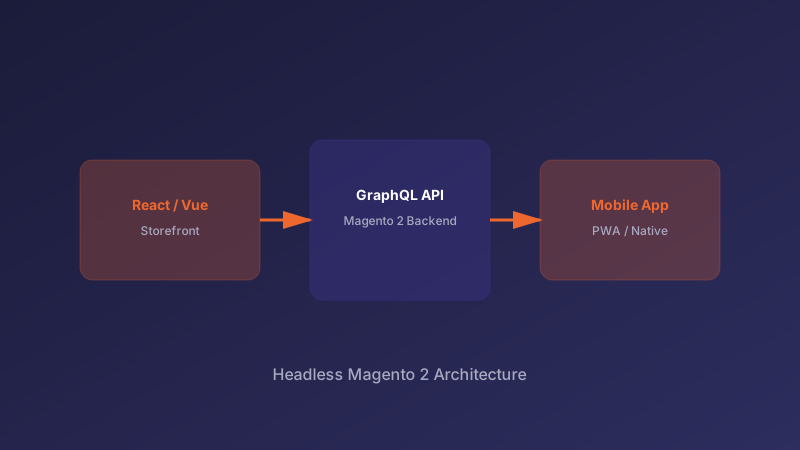
What Is Headless Magento 2?
Headless commerce decouples the Magento 2 backend (catalog, cart, checkout, orders) from the frontend presentation layer. The storefront communicates with Magento via GraphQL or REST APIs instead of traditional theme templates.
This architecture lets you build custom frontends in React, Vue, or Next.js, deploy PWAs, and power mobile apps — all from a single Magento backend.
Benefits and Trade-offs
Headless delivers superior frontend performance, design flexibility, and omnichannel capability. Marketing teams can iterate on the storefront without touching Magento backend code.
The trade-off is higher development complexity and cost. You lose some out-of-the-box Magento frontend features and must rebuild or replace them in your custom frontend. Extension compatibility also requires extra work.
Implementation Roadmap
Start with a GraphQL API audit to map required queries and mutations for your catalog, cart, and checkout flows. Build a proof-of-concept storefront for your highest-traffic pages first — typically homepage, PLP, PDP, and cart.
Use PWA Studio or a custom Next.js frontend depending on your team's skills. Plan a phased rollout: launch the headless frontend for browse-and-buy pages while keeping legacy checkout if needed, then migrate checkout once tested.
Need help with your Magento 2 project?
Talk to Our Team